

Fire Life Safety Inspections Are a Non-Negotiable for California Facilities
Keep Your Occupants Safe. Protect Your Facility. Reduce Your Liability.
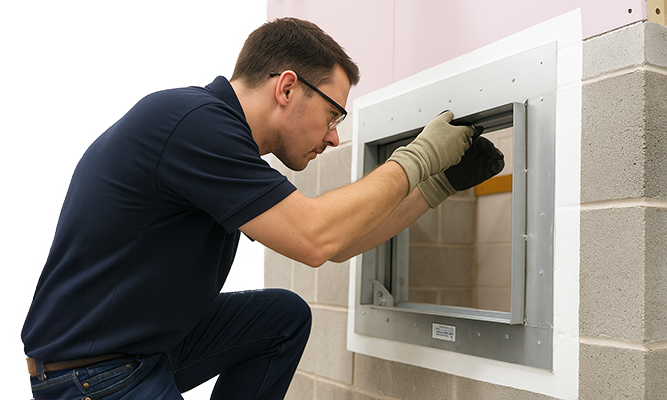
WHAT’S INVOLVED IN FIRE LIFE SAFETY
Proper Fire Life Safety goes beyond installing equipment
The California Fire Code (CFC) requires that your facility be periodically inspected and tested by qualified technicians to ensure all fire and life safety systems remain in proper working order.
Required Inspection Frequencies:
Fire/Smoke Dampers (FSD):
Inspected one year after the intial acceptance testing, and every four (4) years thereafter (every six [6] years for hospitals).Smoke & Heat Vents (SHV):
Mechanical vents are inspected annually and operationally tested every five (5) years.
Gravity vents are inspected annually.Smoke Control Systems (SCS):
Dedicated systems and associated dampers are inspected semi-annually (every six [6] months).
Non-dedicated systems, including smoke removal systems and associated dampers, are inspected annually.Mechanical Smoke Removal Systems (MSRS):
Inspected annually.
Our contractors don’t rely on guesswork, they deploy skilled, trained, and certified technicians to perform thorough inspections, ensuring your FSD, SHV, SCS, and MSRS systems function as designed when it matters most.
Protect your facility. Maintain compliance with state regulations. Be prepared for the unexpected.
Fire Life Safety Compliance Includes:
Certified technicians (ISO 17024 Accredited) providing operational, acceptance, and periodic inspection services for Fire/Smoke Dampers (FSD), Smoke & Heat Vents (SHV), Smoke Control Systems (SCS), and Mechanical Smoke Removal Systems (MSRS)
Ensuring full compliance with the California Fire Code (CFC), California Mechanical Code (CMC), and all regionally adopted amendments and regulations regarding FSD, SHV, SCS, and MSRS inspections.
Ensure preparedness for inspections by maintaining accurate documentation that can be provided upon request to the Authority Having Jurisdiction (AHJ).
Verification of proper duct smoke detector placement and airflow velocity to ensure the detector operates in accordance with its design intent.

Pro Tip: Missed inspections put your building at risk—leading to non-compliance, liability exposure, safety hazards, and potential fines or added fees. Stay ahead by ensuring compliance with certified professionals.
The Risk of Skipping Periodic Inspections
A landmark study by the University of Maryland evaluated the real-world reliability of fire dampers, smoke dampers, and smoke control systems across existing buildings. The findings were significant:
170,000+ dampers reviewed — 53% required repairs
740 smoke control system projects analyzed — 41% of stairwells needed repairs or adjustments
The study, led by Dr. James Milke and researcher Robert Ayoub, highlights a critical reality: fire and smoke protection systems degrade over time and cannot be assumed to function as designed without regular inspection.

CALIFORNIA CODES & FIRE LIFE SAFETY
In California, meeting Fire Life Safety standards isn’t optional
it’s the law.
2025 California Fire Code (CFC) Requirements:
Fire/Smoke Dampers (FSD) per Section 706 and NFPA 80/105 must be tested one (1) year after the intial acceptance testing and every four (4) years thereafter (every six [6] years for hospitals)
Smoke & Heat Vents (SHV) per Section 910.5.1 require mechanically operated vents to be inspected annually and operationally tested at least every five (5) years, while gravity (drop-out) vents are inspected annually
Smoke Control Systems (SCS) per Sections 909.22.4 and 909.22.5, require dedicated systems to be tested semi-annually and non-dedicated systems annually. NFPA 92 clarifies that testing must include verification of airflow quantities and pressure differentials at smoke barrier openings, air makeup supplies, and smoke exhaust equipmen
Mechanical Smoke Removal Systems (MSRS) per Section 910.5.2 must be inspected and operationally tested annually, including all components, controls, and ancillary equipment such as makeup air openings.

WHY Skilled & Trained CONTRACTORS ARE THE TOP CHOICE For Californians
Not all contractors are equipped to handle Fire Life Safety requirements for schools, municipalities, and large facilities. Ours are.
We connect you with contractors who:
Employ International Certification Board (ICB) certified (ISO 17024 Accredited), apprenticeship-trained FSD and SCS technicians
Understand California’s Skilled & Trained Workforce requirements
Are experienced with complex, non-cookie-cutter systems
Meet fire code, mechanical code, and regional inspection requirements — every time
Prioritize safety, accuracy, and getting it done right the first time
Your building and occupants depend on fire life safety systems functioning properly. You can’t afford to gamble.
Stop GAMBLING
Start Working with Skilled & Trained Fire life Safety Professionals today
how it works
Search Our Verified Directory
Choose your location and project type—HVAC installation, heat pump upgrades, maintenance, fire life safety, and more.
Review Certified Matches
See qualified contractors near you, the services they offer, and workforce certifications.
Connect with Confidence
Call directly or contact the right pro for your project with a simple click.
-
Section 706 requires that fire and smoke dampers be inspected and maintained in accordance with NFPA 80 and NFPA 105.
These standards require dampers to be tested:One (1) year after the intial acceptance testing, and
Every four (4) years thereafter
Every six (6) years in buildings containing a hospital
-
Section 910.5.1 requires smoke and heat vents to be inspected and maintained as follows:
Mechanically operated vents: inspected annually and operationally tested at least every five (5) years
Gravity (drop-out) vents: inspected annually
-
Section 909.22 establishes testing requirements for smoke control systems:
Dedicated systems (e.g., stair pressurization): tested semi-annually (twice per year)
Non-dedicated systems: tested annually
-
Section 910.5.2 requires systems to be:
Inspected and operationally tested annually
Testing must include verification of all system components, controls, and ancillary equipment, including makeup air openings.

Frequently Asked Questions
HVAC Fire Life Safety: Saving Lives Doesn’t Stop at Alarms and Sprinklers
Safe egress during an emergency is essential for building occupants, while first responders also require a safe means of entry to perform rescue and suppression operations. If any component of the fire and life safety system fails, the system as a whole is compromised. Fire/smoke dampers (FSD), smoke and heat vents (SHV), smoke control systems (SCS), and mechanical smoke removal systems (MSRS) must function as designed, as each plays a critical role in maintaining tenable conditions and protecting occupant safety during an event.